How to Reduce Indoor Allergens in Your Home

A home can look clean and still trigger sneezing, itchy eyes, coughing, or a stuffy feeling by bedtime. Dust settles behind furniture, pet dander travels through return vents, and moisture in a basement or bathroom can create conditions that make allergies harder to manage. Knowing how to reduce indoor allergens starts with finding the places where particles collect, then building practical habits that keep them from circulating again.
For many Greater Boston homeowners, the answer is not one product or one deep-cleaning day. Older homes, renovated multifamily properties, and retrofitted duct systems often have more hiding places for dust and airflow problems. The most effective approach combines regular surface cleaning, humidity control, better filtration, and attention to the HVAC system that moves air through the home.
Start With the Allergens Already in the House
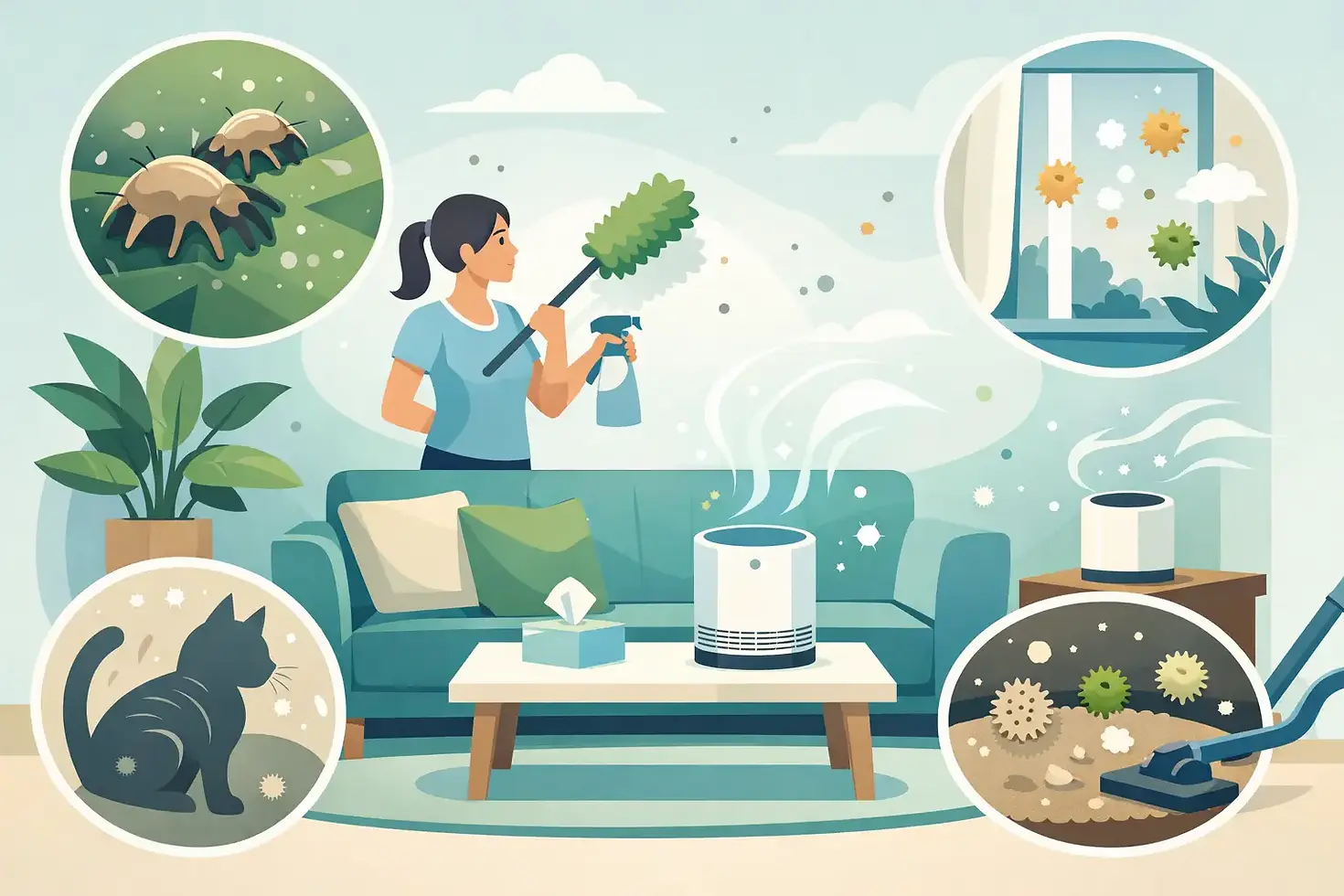
Indoor allergens usually come from a few familiar sources: dust mites, pet dander, pollen tracked in from outdoors, mold spores, and cockroach debris in some homes. They are small enough to settle into fabrics and corners, then become airborne again when people walk through a room, make a bed, or turn on the heating or cooling system.
The goal is not to make a home sterile. That is neither realistic nor necessary. The goal is to reduce the overall allergen load, especially in bedrooms and the rooms where your family spends the most time.
Vacuum carpets, rugs, upholstered furniture, and fabric-covered pet areas with a vacuum that has sealed HEPA filtration. A standard vacuum can pick up visible debris while sending finer particles back into the room through the exhaust. HEPA-equipped equipment is particularly helpful for households with pets, children, or known allergy sufferers.
Use a damp microfiber cloth for shelves, window sills, ceiling-fan blades, and other hard surfaces. Dry dusting can simply move particles into the air. Work from high surfaces down to the floor so you are not cleaning the same dust twice.
Make Bedrooms the First Priority
People spend hours each night close to pillows, mattresses, blankets, and carpeting. That makes the bedroom the most useful place to focus when allergy symptoms are persistent.
Wash sheets, pillowcases, and blankets weekly in hot water when the fabric allows it. Dust mites thrive in bedding, especially when rooms are warm and humid. Allergy-proof mattress and pillow covers can provide another layer of protection by limiting exposure to allergens inside those items.
If possible, keep pets out of bedrooms, even if they are allowed elsewhere in the house. Pet dander is lightweight and sticky, so it clings to bedding, clothing, and upholstery long after a pet leaves the room. This can be a difficult change for families, but keeping one low-allergen sleeping space often makes a noticeable difference.
Wall-to-wall carpeting can also hold dust, dander, and pollen. Removing it is not always practical, particularly in older homes or rental properties. In that case, frequent HEPA vacuuming and periodic professional carpet cleaning are sensible alternatives. Washable area rugs are often easier to maintain than thick, wall-to-wall carpet.
Control Moisture Before Mold Becomes a Bigger Problem
Mold spores can aggravate allergies and respiratory symptoms, and they need moisture to grow. A musty smell, staining around vents, peeling paint, condensation on windows, or recurring mildew in a bathroom are signs worth taking seriously.
Keep indoor humidity generally between 30% and 50%. A simple humidity monitor can show whether a basement, bedroom, or bathroom is staying too damp. Dehumidifiers can help in damp basements, while bathroom exhaust fans should run during showers and for a while afterward. If a fan is weak, noisy, or vents improperly, it may not be removing enough moisture.
Address plumbing leaks, roof leaks, and foundation moisture promptly. Cleaning visible mildew without correcting the water source is only a temporary fix. Larger areas of mold growth, recurring growth, or contamination around HVAC equipment may call for a closer professional evaluation.
Improve Filtration Without Restricting Airflow
Your HVAC filter is a front-line defense against airborne dust, pollen, and dander. But a more expensive filter is not automatically the right filter for every system. Very dense filters can restrict airflow if the equipment is not designed for them, which can strain the blower and reduce heating or cooling performance.
Check the filter size, fit, and recommended rating for your system. Many homes do well with a quality pleated filter, but the appropriate MERV rating depends on the system and household needs. If someone in the home has significant allergies, ask an HVAC professional what level of filtration your equipment can handle safely.
Replace filters on a regular schedule, usually every one to three months. Homes with pets, ongoing construction nearby, heavy system use, or multiple occupants may need more frequent changes. A filter that looks gray and packed with debris is already making the system work harder.
Portable air cleaners with true HEPA filters can also help in frequently used rooms and bedrooms. They work best when sized for the room, run consistently, and used alongside source control and cleaning. An air purifier cannot compensate for a damp basement, an overloaded HVAC filter, or a duct system full of accumulated debris.
How to Reduce Indoor Allergens Through HVAC Maintenance
Every forced-air system moves whatever is present in the air. If return vents are dusty, filters are overdue, or the evaporator coil has buildup, your HVAC system may circulate particles while operating less efficiently than it should.
Start with the simple checks: keep supply and return vents open and unobstructed, vacuum vent covers, and make sure furniture or rugs are not blocking airflow. If some rooms are consistently dusty, feel stuffy, or receive weak heating and cooling, the issue may be more than surface dust.
Ductwork can collect dust, pet hair, renovation debris, and other particles over time. This is especially common in older Boston-area homes where additions, renovations, and retrofitted ducts may create long runs, tight turns, or hard-to-reach sections. Visible debris around registers, excessive dust shortly after cleaning, unusual odors when the system starts, or a recent renovation are reasonable reasons to have the system inspected.
Professional duct cleaning is not a substitute for routine housekeeping or filter changes, and it will not cure every allergy problem. It can, however, remove accumulated material from accessible ductwork and HVAC components when there is a real buildup concern. A thorough service should use mechanical brushing and powerful vacuum collection, ideally with HEPA filtration, rather than simply spraying fragrance or sanitizer into vents.
The evaporator coil deserves attention as well. When a coil collects dust and grime, airflow and cooling performance can suffer. In humid weather, a dirty coil can also contribute to moisture-related issues. A proper inspection helps determine whether cleaning is needed instead of guessing based on a single symptom.
At JC Duct Cleaning, the focus is on inspecting the system, explaining what is actually present, and recommending work based on the home rather than a one-size-fits-all package. That matters when a home has older ductwork or a ventilation layout that needs a more careful approach.
Keep Outdoor Allergens From Settling In
Pollen enters through open windows, shoes, clothing, and pets. During high-pollen periods, keeping windows closed while using properly maintained air conditioning can reduce the amount entering the home. If you prefer fresh air, it may be worth checking local pollen conditions first and airing out the home when levels are lower.
Place durable mats at exterior doors and ask family members to remove shoes inside. Wipe pets down after long outdoor walks, especially during spring and fall. These small habits reduce how much pollen reaches carpets, furniture, and bedding.
Do not overlook laundry. Clothes worn outdoors can carry pollen into bedrooms if they are placed on chairs or beds. Changing after yard work and washing heavily exposed clothing can make a practical difference for people with seasonal allergies.
Know When a Problem Needs More Than Cleaning
If symptoms continue despite a consistent cleaning routine, look for patterns. Are they worse in one room? Do they flare up when the heat or AC turns on? Is there a musty odor after rain, or are you seeing dust around vents soon after changing the filter? Those details can point to moisture, filtration, airflow, or ductwork concerns.
A home with allergy triggers does not need a dramatic overhaul all at once. Begin with bedding, filters, moisture control, and the rooms used most often. Then pay attention to what changes. Cleaner air is usually the result of several ordinary maintenance decisions made consistently, and a well-maintained HVAC system helps those efforts reach every room.


Comments